
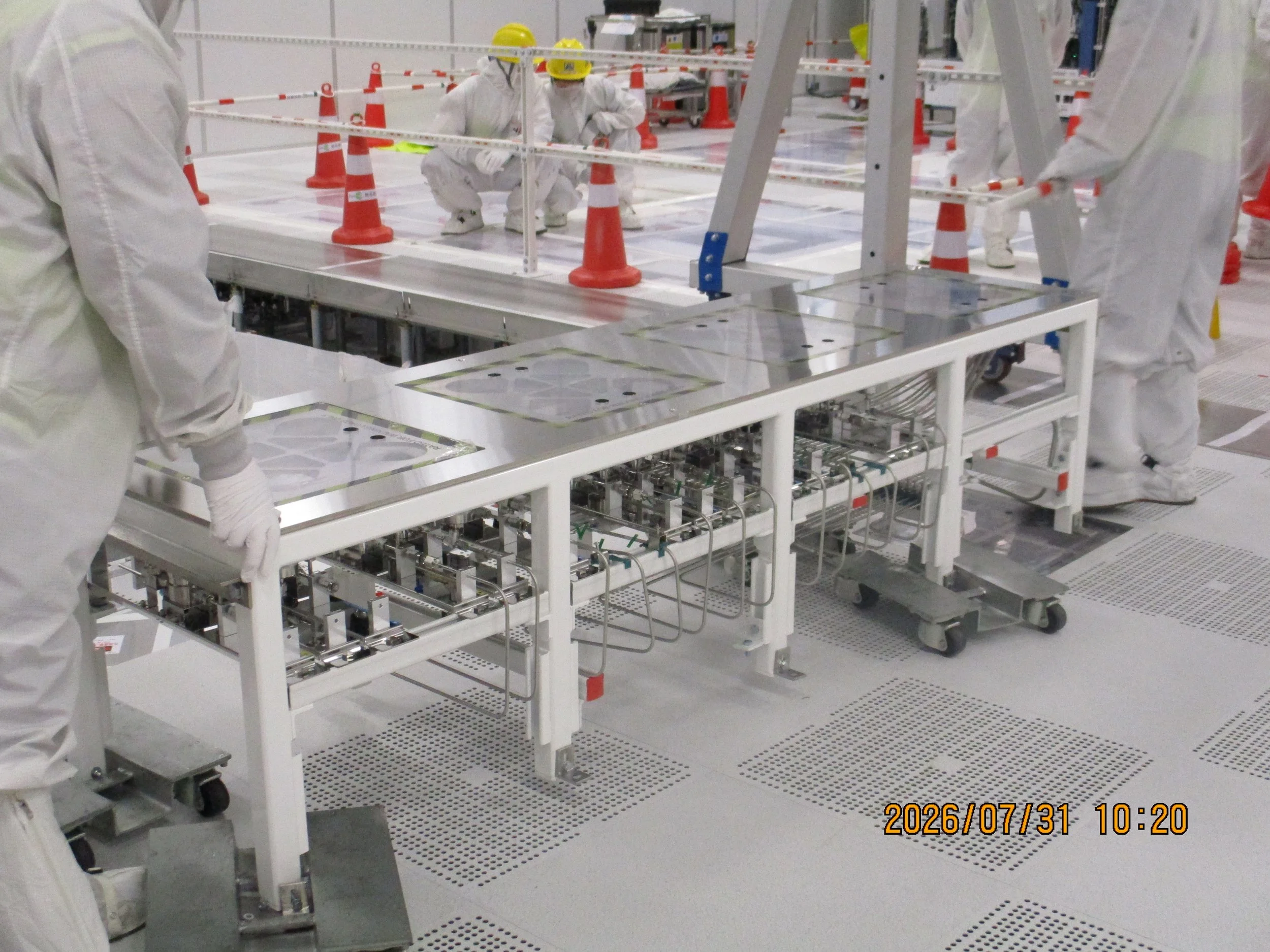
Semiconductor equipment is engineered to operate within highly controlled and demanding environments. Yet when discussing equipment performance, attention often centers on the equipment itself—its technology, specifications, and operating conditions. The structure supporting the equipment is less visible, but it can play an important role in establishing the mechanical conditions in which the equipment is installed and operates.
An equipment support system is more than a physical base. It provides the structural interface between the equipment and the floor or supporting structure, transferring loads while maintaining the required level of stability. Equipment weight, load distribution, mounting locations, support geometry, and site conditions all contribute to how that system behaves. For applications with demanding stability requirements, these factors need to be considered together rather than treated as isolated design elements.
Stiffness is one of the key considerations. When a support system is subjected to equipment loads, its structural response includes deformation and displacement. The magnitude of that response depends on the materials, geometry, connections, loading conditions, and supporting structure. Evaluating stiffness during the engineering stage can help identify potential issues before fabrication, while physical stiffness testing can provide measured data under defined loading conditions.
Vibration introduces another layer of consideration. Semiconductor equipment may be sensitive to vibration from operating equipment, neighboring systems, building activity, or other environmental sources. Because the support system forms part of the mechanical path between the equipment and its surroundings, its characteristics can influence the overall vibration environment. Understanding that environment requires looking at the equipment, support system, and installation conditions together.
This is also why equipment support should be considered early in the installation process. Dimensions, elevations, interfaces, floor conditions, access requirements, and other site constraints can affect the final design. Coordinating these requirements across engineering, fabrication, testing, and installation helps ensure that the support system is not only structurally appropriate, but also practical to manufacture and install.
Engineering analysis and physical testing provide complementary ways to evaluate these considerations. Finite element analysis can be used to study structural behavior, stiffness, natural frequencies, and mode shapes before fabrication. Testing can then provide measured information about specific performance characteristics under defined conditions. Together, analysis and testing help connect design assumptions with actual performance.
Ultimately, equipment support should be viewed as part of the overall equipment installation strategy. The goal is not simply to create a structure capable of carrying a load, but to develop a support solution that is aligned with the equipment, the installation environment, and the project's performance requirements.
At PURVION, we bring engineering, fabrication, testing, and installation support together through one coordinated process, developing equipment support solutions around the specific requirements of each project.